Waiting room chairs are the first seating many visitors experience, so they need to look professional, stay comfortable during short visits, and hold up under constant daily use. For clinics, corporate lobbies, government buildings, showrooms and public facilities, choosing the right reception seating affects both first impressions and long-term maintenance costs. This guide explains how to evaluate capacity, materials, frames and configurations before buying in bulk.
Why Waiting Room Seating Matters for Your Business
Visitors usually sit for ten minutes to over an hour, so seating should support an upright, relaxed posture without the adjustment controls needed at a work desk. Sturdy frames, stable armrests and even weight distribution prevent complaints, wobble and early wear. A coordinated seating layout also makes a reception area feel organized and welcoming, which supports your brand from the moment someone walks in.
Common Waiting Room Configurations
Waiting seating is usually grouped by the number of seats per unit. Match the configuration to your room width, expected traffic and whether people arrive alone or in groups:
- Single-seat visitor chairs: flexible standalone chairs that can be rearranged; a one-seat model such as the Waiting Room Chair (RS-19) suits smaller lobbies and spare corners.
- Two-seat benches: a compact option for narrow walls and paired visitors; see the 2-Seat Waiting Room Chair (RS203-A3).
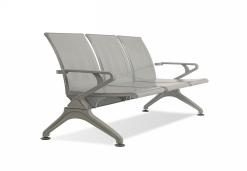
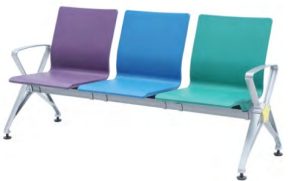
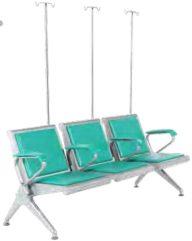
- Three-seat benches: the most common choice for clinics and mid-size lobbies; the 3-Seat Waiting Room Chair (RS203-A4) balances capacity with footprint.
- Four- and five-seat rows: high-traffic public areas where long runs of seating are needed, such as the 5-Seat Waiting Room Chair (A5PU5).
Browsing the full waiting chairs collection makes it easy to compare single, multi-seat and bench options side by side.
Materials and Frames to Evaluate
- Upholstery: PU leather and coated leather are easy to wipe down and popular in clinics; mesh and fabric feel cooler in warm climates but need regular cleaning.
- Frames: steel frames offer high strength for heavy public use, while aluminum keeps the row lighter and more corrosion resistant near coastal areas.
- Armrests and linkage: fixed or padded armrests help visitors stand up; linked beams keep rows aligned and reduce individual tipping.
- Weight capacity: confirm the rated load per seat, especially for public seating used by a wide range of body sizes.
- Cleanability: smooth, non-porous surfaces simplify disinfection in medical and food-adjacent environments.
Key Factors for a Commercial Purchase
- Capacity and footprint: measure wall length, circulation gaps and wheelchair or stroller space before choosing one-, two- or multi-seat units.
- Comfort for short stays: expect firm but supportive cushions; deep recline adjustment is not usually required for visitor seating.
- Durability and warranty: ask about frame finish, cushion density and expected service life under daily turnover.
- Color consistency: large orders should use the same upholstery batch so all rows match across the area.
- Lead time and packaging: confirm carton counts, assembly requirements and delivery schedule against your opening date.
Styles by Industry
- Clinics, dental and hospitals: prioritize easy-clean upholstery, antibacterial surfaces and stable armrests.
- Corporate lobbies: choose colors and lines that match reception desks and brand finishes.
- Government and public halls: favor heavy-duty steel frames and neutral, stain-resistant materials.
- Showrooms and retail: more design-forward lounge or sofa-style seating can double as display pieces.
Sourcing in Bulk: What to Ask the Supplier
When ordering multiple rows for a project, request details on minimum order quantity, upholstery and color customization, sample lead time, production lead time, packaging, pre-shipment inspection and shipping terms. Our overview of MOQ and lead time for furniture exports explains how these factors shape a B2B order.
FAQ
How many seats do we need in a waiting room? Estimate peak visitor numbers and average visit length, then add roughly 15–20% spare capacity; mix single chairs with two- or three-seat benches to fit different group sizes.
Are waiting room chairs easy to clean? PU and coated leather surfaces can be wiped with standard disinfectants; mesh and fabric require vacuuming and occasional spot cleaning, so choose upholstery to match your hygiene requirements.
Can colors and upholstery be customized for a bulk order? Many models support upholstery and finish options; share your target colors, quantities and market with the supplier to confirm customization and the applicable minimum order.
Do multi-seat benches arrive assembled? Packaging and assembly vary by model; confirm whether seats, beams and armrests ship flat-packed or pre-assembled, and factor installation time into your plan.
As a factory-direct furniture supplier, we help buyers select and customize waiting and reception seating for clinics, lobbies and public projects. Explore the waiting chairs range or contact our team with your room plan and quantities for a tailored proposal.